
Not every garbage disposal is safe for a septic tank. The best garbage disposal for septic systems uses special features, like enzyme injection or extra fine grinding, to protect your tank instead of overloading it. This guide covers the top models, real specs on power and warranty, and simple steps to keep your septic system healthy for years.
Can You Use a Garbage Disposal With a Septic System?
Yes, you can use a garbage disposal with a septic system. You just need to pick the right model and use it the right way.
A disposal sends food waste straight into your tank. Your septic tank uses bacteria to slowly break that waste down. When you add too much solid food too fast, it can throw off that balance. Over time, this leads to sludge buildup or a tank that needs pumping more often than normal.
How Extra Food Waste Affects Your Tank
Extra food waste simply fills your tank faster. It’s not dangerous right away, but it changes how often you need a pump-out. A tank sized for a family of four without a disposal may need service sooner once a disposal is added. This is why checking your tank size before buying matters more than most people realize.
What Makes a Disposal Septic Safe?
A disposal is truly septic safe when it does one of two things well: adds helpful bacteria to your tank, or grinds food waste into much smaller pieces. Everything else is a nice extra, not a real safety feature.
Enzyme Injection Systems
This is the biggest difference between a regular disposal and a septic safe one. Some models release enzyme producing microorganisms into your tank every time you run them. These enzymes speed up the natural breakdown process already happening in your tank. It’s the same idea behind septic safe toilet paper, just built into your disposal instead.
Fine Grinding Technology
A finer grind means smaller waste particles reach your tank. Multi stage grinding systems, which pass food through more than one grinding step, produce smaller pieces than basic single stage units. Smaller particles break down faster and cause fewer clogs down the line.
What Doesn’t Matter as Much
Horsepower and noise level affect how well a disposal grinds and how loud it runs. But they don’t make a disposal safer for your septic tank on their own. A quiet, powerful disposal without enzyme injection or fine grinding isn’t automatically septic safe just because the listing says so.
Not sure your tank can handle a disposal yet? Before you buy anything, check your current sizing and read through our full garbage disposal buying guides to see which style fits your kitchen and household size.
Top Septic Safe Garbage Disposals in 2026
InSinkErator Evolution Septic Assist (Best Overall)
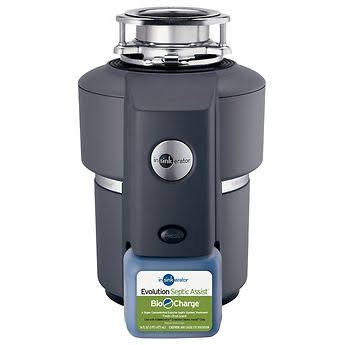
This is the model most plumbers recommend first for septic homes. It runs a 3/4 HP motor and injects over 300 million enzyme producing microorganisms into your tank every time it runs. It also uses two stage grinding, so waste comes out finer than a standard single stage disposal.
One thing to know: its warranty is shorter than InSinkErator’s other models, at 4 years, compared to 10 years on the Pro 750 and 12 years on their top Pro 1250 model. That’s a fair trade for the septic specific features, but worth knowing before you buy.
Not every garbage disposal is safe for a septic tank. The best garbage disposal for septic systems uses special features, like enzyme injection or extra fine grinding, to protect your tank instead of overloading it. This guide covers the top models, real specs on power and warranty, and simple steps to keep your septic system healthy for years.
Can You Use a Garbage Disposal With a Septic System?
Yes, you can use a garbage disposal with a septic system. You just need to pick the right model and use it the right way.
A disposal sends food waste straight into your tank. Your septic tank uses bacteria to slowly break that waste down. When you add too much solid food too fast, it can throw off that balance. Over time, this leads to sludge buildup or a tank that needs pumping more often than normal.
How Extra Food Waste Affects Your Tank
Extra food waste simply fills your tank faster. It’s not dangerous right away, but it changes how often you need a pump-out. A tank sized for a family of four without a disposal may need service sooner once a disposal is added. This is why checking your tank size before buying matters more than most people realize.
What Makes a Disposal Septic Safe?
A disposal is truly septic safe when it does one of two things well: adds helpful bacteria to your tank, or grinds food waste into much smaller pieces. Everything else is a nice extra, not a real safety feature.
Enzyme Injection Systems
This is the biggest difference between a regular disposal and a septic safe one. Some models release enzyme producing microorganisms into your tank every time you run them. These enzymes speed up the natural breakdown process already happening in your tank. It’s the same idea behind septic safe toilet paper, just built into your disposal instead.
Fine Grinding Technology
A finer grind means smaller waste particles reach your tank. Multi stage grinding systems, which pass food through more than one grinding step, produce smaller pieces than basic single stage units. Smaller particles break down faster and cause fewer clogs down the line.
What Doesn’t Matter as Much
Horsepower and noise level affect how well a disposal grinds and how loud it runs. But they don’t make a disposal safer for your septic tank on their own. A quiet, powerful disposal without enzyme injection or fine grinding isn’t automatically septic safe just because the listing says so.
Not sure your tank can handle a disposal yet? Before you buy anything, check your current sizing and read through our full garbage disposal buying guides to see which style fits your kitchen and household size.
Top Septic Safe Garbage Disposals in 2026
InSinkErator Evolution Septic Assist (Best Overall)
This is the model most plumbers recommend first for septic homes. It runs a 3/4 HP motor and injects over 300 million enzyme producing microorganisms into your tank every time it runs. It also uses two stage grinding, so waste comes out finer than a standard single stage disposal.
One thing to know: its warranty is shorter than InSinkErator’s other models, at 4 years, compared to 10 years on the Pro 750 and 12 years on their top Pro 1250 model. That’s a fair trade for the septic specific features, but worth knowing before you buy.
Waste King L-8000 (Best Power for the Price)
If enzyme injection isn’t a must-have for you, this model leans on raw grinding power instead. It runs a 1 HP motor at up to 2800 RPM with stainless steel grinding parts, which breaks food waste down thoroughly even without a dedicated septic feature. It usually costs less than the InSinkErator Septic Assist, making it a solid middle ground.
Moen GX50C (Best Compact Pick)
Small kitchen, small budget, or just less daily cooking? The Moen GX50C is a 1/2 HP unit that still handles everyday food scraps well for its size. It won’t keep up with heavy daily grinding like the two picks above, but paired with lighter household use, it’s a fine choice. If you want to see how this horsepower class compares across brands, our best 1/2 HP garbage disposals guide breaks it down further.
How to Protect Your Septic Tank After Installing a Disposal
The disposal you choose matters, but so do the habits you build around it. Good habits can matter just as much as which model you buy.
Check Your Tank Size First
Before buying anything, get your tank size and condition confirmed by a septic inspector. A tank that worked fine for years without a disposal may need more frequent service once you add one, especially if your household has grown since it was installed. This one call is the cheapest insurance you can buy before spending money on a new disposal.
Simple Habits That Help
- Run cold water while the disposal is on. This helps waste move through your pipes instead of settling.
- Skip fibrous, starchy, or greasy foods. These are hard on any septic system, disposal or not.
- Run citrus peels through now and then for smell control only, not as a real cleaning method.
- Ask your inspector for a realistic pump-out schedule once your disposal is in use.
If you’re installing a disposal for the first time, our guide on how to install a garbage disposal without a dishwasher connection walks through the mounting and wiring steps, which are the same no matter which septic safe model you pick.
Common Mistakes to Avoid
- Trusting the label alone. Some listings say “septic safe” without real enzyme injection or fine grinding behind it. Check the actual specs before you pay extra for a “septic” tag that doesn’t mean much.
- Skipping the tank check. This is the step most people skip, and the one most likely to cause problems later. A five minute inspection now can save you a much bigger repair bill down the road.
- Overloading the unit. Even the best septic safe disposal struggles if you consistently dump heavy food waste into it daily. Treat it as a helper for scraps, not a replacement for your trash can.
- Ignoring warning signs. A slow drain or new smell right after installing a disposal is your system telling you something. Don’t wait months to look into it.
When to Call a Professional
Talk to a septic inspector before you install anything, not just after something goes wrong. Slow drains, bad smells near your drain field, or needing pump-outs sooner than expected are all signs worth a closer look. The EPA’s septic systems guide is a solid starting point if you want to understand how these systems work before you call someone out.
FAQs
Will a garbage disposal ruin my septic system? Not on its own. A disposal adds to your tank’s waste load, but a properly sized, well maintained tank can usually handle it. Problems usually come from an already undersized tank or skipping maintenance.
Do I need a special tank additive if I install a disposal? Not if you choose a model with built in enzyme injection, since that already does the job. If you go with a standard disposal, ask a local septic pro whether an additive makes sense for your specific tank.
How often will I need to pump my tank after adding a disposal? It depends on your tank size and how much you actually use the disposal. Ask your inspector for a starting estimate, then adjust if you notice slow drains or odors.
Can I switch from a regular disposal to a septic safe model later? Yes. Most septic safe models use the same standard mounting system as regular disposals, so it’s an easy swap. It’s still worth having your tank inspected around the same time.
Will a garbage disposal ruin my septic system?
Not on its own. A disposal adds to your tank’s waste load, but a properly sized, well maintained tank can usually handle it. Problems usually come from an already undersized tank or skipping maintenance.
Can I switch from a regular disposal to a septic safe model later?
Not if you choose a model with built in enzyme injection, since that already does the job. If you go with a standard disposal, ask a local septic pro whether an additive makes sense for your specific tank.
How often will I need to pump my tank after adding a disposal?
It depends on your tank size and how much you actually use the disposal. Ask your inspector for a starting estimate, then adjust if you notice slow drains or odors.
How often will I need to pump my tank after adding a disposal?
Yes. Most septic safe models use the same standard mounting system as regular disposals, so it’s an easy swap. It’s still worth having your tank inspected around the same time.