
Yes, a garbage disposal can run on a septic system. But it changes how your tank works. A disposal sends ground food waste straight into your tank instead of the trash, and that adds real solid load your system has to break down. Septic professionals commonly estimate this raises the solids entering your tank by roughly 30 to 50 percent. Left unmanaged, that can shorten your pump-out interval from the typical 3 to 5 years down to every 2 to 3 years. This guide covers what actually protects your tank, which models handle it best, and what it costs to get this wrong.
Quick Summary:
| Disposal type | Household size | Pump-out interval | Our take |
| Standard 1/2 HP unit | 1 to 2 people | About every 2 years | Use with caution |
| Standard 3/4 HP to 1 HP unit | 3 to 4 people | Every 2 to 3 years | Workable with the protocol below |
| Enzyme injection model | Any size | Every 3 to 5 years (close to normal) | Best overall protection |
| No disposal at all | Any size | Every 3 to 5 years | Lowest risk |
What a Disposal Actually Does to Your Tank
A disposal does not remove food waste. It relocates it. Instead of going into your trash can, ground scraps travel through your pipes and settle in your septic tank, where bacteria slowly break them down.
Your tank runs on a fixed bacterial ecosystem. That ecosystem breaks down waste at a set pace. Add more solid material than usual, and one of two things happens: waste piles up faster than the bacteria can process it, or the extra volume pushes solids toward your drain field (also called a leach field) before they finish breaking down. Neither outcome is immediate. Both get worse the longer they go unmanaged.
What It Costs When This Goes Wrong
A routine pump-out generally runs a few hundred dollars. A failed drain field is a different problem entirely. Replacing one commonly runs into the thousands of dollars, and severe cases climb well past $10,000 depending on your system size, soil conditions, and region. This is why the guidance in this article leans cautious. The downside of ignoring it is expensive and slow to reverse.
Two Ways to Run a Disposal Safely on Septic
You have two real options here, not a dozen half-measures. Pick one and commit to it, rather than mixing pieces of both.
Path 1: An Enzyme Injection Model
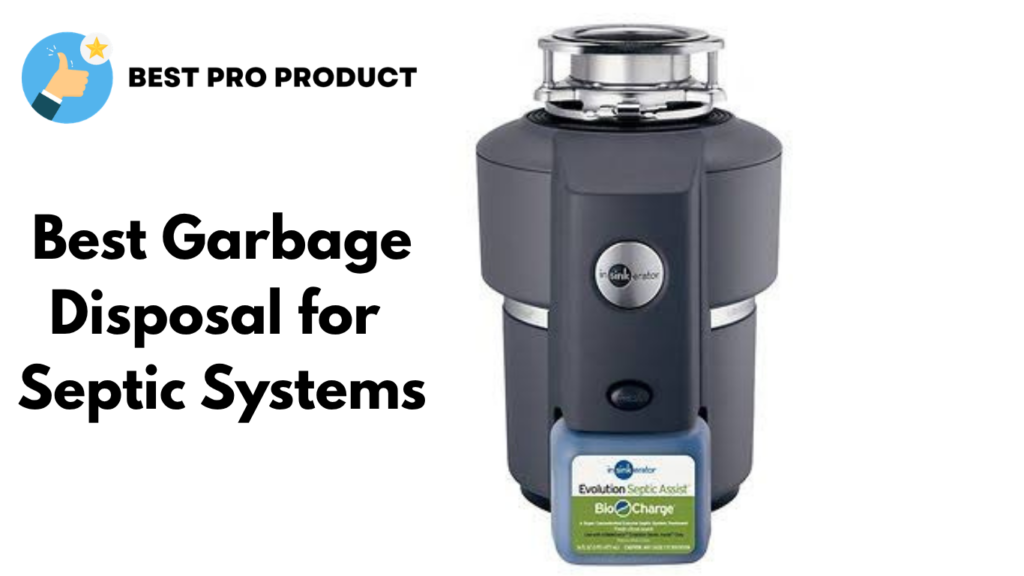
The InSinkErator Evolution Septic Assist is currently the only major disposal built specifically for septic use. Each time it runs, it injects a measured dose of enzyme-producing microorganisms, more than 300 million per activation according to InSinkErator’s own specifications, directly into the ground waste. Those enzymes help your tank’s bacteria process solids faster than they would on their own.
It runs a 3/4 HP motor with two-stage grinding, which produces finer particles than a basic single-stage unit. The enzyme cartridge needs replacing every few months, which is an ongoing cost on top of the unit itself, so budget for that when comparing prices. Its standard warranty also runs shorter than InSinkErator’s non-septic models, so confirm the exact term before you buy.
Path 2: A Standard Disposal With a Stricter Routine
If you’d rather skip the enzyme cartridge and its recurring cost, a standard disposal can still work on septic, provided you follow a stricter routine than you would on city sewer. Stick to 3/4 HP or higher. Lower-powered units like a 1/3 HP model leave larger, unground particles that settle and accumulate faster in your tank.
The routine itself is short but not optional:
- Scrape plates into the trash first. Use the disposal only for what rinses off easily, not as your main waste removal method.
- Run cold water for at least 30 seconds after each use, longer than the 15 to 20 seconds typically recommended for city sewer systems.
- Move your pump-out schedule to every 2 to 3 years instead of the standard 3 to 5.
- Have a technician check solids levels around year two of regular use, even if you’re not due for a scheduled pump-out yet. Catching buildup early costs far less than repairing a strained drain field later.
Not sure which path fits your household? Before you spend on a unit, compare sizing and pricing in our garbage disposal buying guides to see what actually fits your kitchen and budget.
Best Garbage Disposals for Septic Systems in 2026
InSinkErator Evolution Septic Assist:
This is the model most plumbers point to first for septic homes, and it’s the only one on this list with true enzyme injection built in. Best fit: households that run the disposal daily, smaller tanks under 1,000 gallons, or older systems with limited buffer capacity.
Waste King L-8000
If you’re following the standard-disposal protocol above instead, this is a strong pick. It runs a 1 HP motor at up to 2800 RPM with stainless steel grinding components, which breaks food waste down thoroughly enough to reduce solid load even without a dedicated septic feature.
Moen GX50C
A 1/2 HP unit that still handles everyday scraps well for lighter households. It won’t keep pace with heavy daily grinding the way the two picks above will, so it’s a better fit for one to two person homes than a full family kitchen. See our best 1/2 HP garbage disposals guide for how this horsepower class compares across brands.
InSinkErator Badger 5
This sits below our 3/4 HP recommendation at 1/2 HP, so it only belongs on septic paired with light use and the stricter maintenance routine, not daily heavy grinding. It carries a 5-year in-home warranty and works reliably for smaller households willing to follow the protocol consistently.
Foods That Cause the Most Problems on Septic
On city sewer, small amounts of these items usually pass through without consequence. On septic, they settle in your tank instead of washing downstream, so the list is stricter.
- Grease, oil, and fat coat the tank baffle and disrupt the bacterial layer that breaks waste down.
- Coffee grounds settle as a dense sludge layer instead of moving through the system.
- Fibrous vegetables like celery, artichoke leaves, and corn husks resist breakdown and mat together.
- Starchy foods such as pasta, rice, and potato peels expand once they’re in the tank, building sludge faster than other waste.
- Eggshells, fruit pits, and bones add inorganic material the bacterial layer can’t process, shortening the time between pump-outs.
- Anything non-food , glass, plastic, or metal, belongs in the trash regardless of which disposal you own.
Check Local Rules Before You Buy
Some states actively discourage disposals on septic systems. Massachusetts is the clearest example: under its Title V regulations, disposals are discouraged on septic properties because of their measurable impact on tank performance. Several coastal counties in other states carry similar guidance where groundwater protection rules are stricter.
A ten-minute call to your county health department, asking specifically whether local rules restrict disposal use on septic, can save you a much larger problem later. The EPA’s SepticSmart program is the national baseline many local rules reference, and it’s worth a read before you buy anything.
A Simpler Alternative: Skip the Disposal Entirely
Composting handles nearly all food scraps with zero impact on your septic system, whether through a countertop bin, an outdoor pile, or a municipal food scrap pickup program where available. This is the right call for aging tanks, aerobic or mound systems where disposal guidance gets murky, high water table properties, or if you know you won’t stick to the maintenance routine consistently.
Common Mistakes to Avoid
- Trusting a “septic safe” label without checking what’s actually behind it. Confirm the model has real enzyme injection or genuinely fine multi-stage grinding, not just marketing language.
- Skipping the tank size check. This is the step most homeowners miss, and the one most likely to cause a costly surprise later.
- Sticking to the old pump-out schedule. A disposal changes your tank’s math. Adjust your interval, don’t assume the old schedule still applies.
- Ignoring early warning signs. Slow drains or new odors near your drain field after installing a disposal are your system telling you something. Look into it right away, not months later.
Frequently Asked Questions
Will a garbage disposal ruin my septic system?
Not by itself. A properly sized, well maintained tank can generally handle the added load from a disposal. Problems tend to come from an already undersized tank, an outdated pump-out schedule, or ignoring the protocol above, not from the disposal itself.
What is the best garbage disposal for a septic system?
The InSinkErator Evolution Septic Assist, since it’s the only major model with true enzyme injection built in. If you’d rather skip the recurring cartridge cost, a 3/4 HP or higher standard disposal paired with the stricter maintenance routine is a reasonable second option.
How often will I need to pump my tank after adding a disposal?
Plan on roughly every 2 to 3 years instead of the standard 3 to 5, unless you’re running an enzyme injection model, which keeps you closer to the normal interval. Ask your septic inspector for a number specific to your tank size and household.
Can I switch from a regular disposal to a septic safe model later?
Yes. Septic-safe models use the same standard mounting hardware as regular disposals, so it’s a straightforward swap. It’s worth having your tank inspected around the same time to check for any buildup from your previous unit.
When to Call a Professional
Talk to a septic inspector before you install anything, not just after a problem shows up. If you’re installing for the first time, our guide on how to install a garbage disposal without a dishwasher connection covers the mounting and wiring steps, which apply the same way regardless of which model you choose.