
If you want to install a garbage disposal without a dishwasher connection, the good news is the process is actually a bit simpler than a standard setup. You skip one whole step — connecting the dishwasher drain hose — but you do need to make sure the disposal is sealed correctly where that connection would normally go.
This guide walks through the full process from start to finish, the details people usually get wrong, and when it makes sense to call in a professional instead.
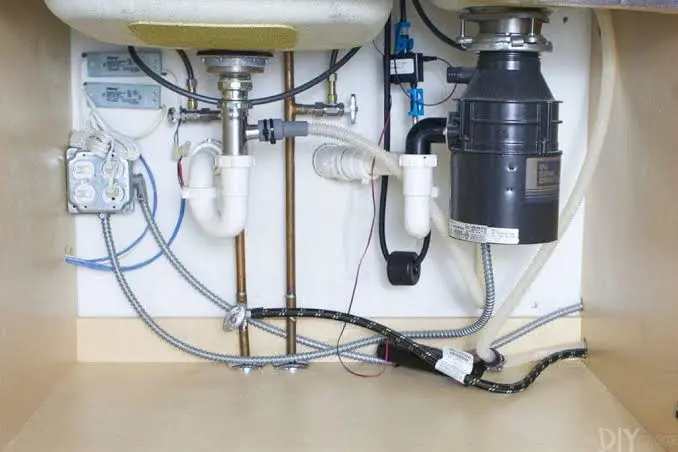
Understanding the Dishwasher Inlet on Your Disposal
Every garbage disposal ships with a small knockout plug on the side of the unit — this is the inlet where a dishwasher drain hose would normally connect if you had one.
Should You Remove the Knockout Plug?
- No dishwasher connection = leave the knockout plug in place. This plug seals that inlet shut so wastewater and food particles can’t leak out of it while the disposal is running.
- Only remove the knockout plug if you’re actually connecting a dishwasher drain hose to that inlet.
This is the single most common mistake in non-dishwasher installations. A lot of generic installation guides and even printed manuals assume a dishwasher is present, so people knock the plug out by habit and then can’t figure out why the unit is leaking from the side a week later. If you ever run into a side leak after installation, this is the first thing to check — before assuming something more serious is wrong.
Why This Matters for Long-Term Reliability
A missing or loose knockout plug doesn’t always leak immediately. Sometimes it only shows up once the disposal has been run a few times and vibration works the plug slightly looser. It’s worth re-checking it once during your first week of use, not just at initial installation.
Tools and Materials You’ll Need
- Garbage disposal unit
- Plumber’s putty (unless your disposal uses a pre-formed rubber gasket — some newer models do, so check your manual first)
- Screwdriver
- Adjustable pliers or a disposal wrench
- A bucket, to catch water when disconnecting an old sink drain
- Wire nuts (if hardwiring rather than using a plug-and-cord model)
- Plumber’s tape (Teflon tape) for threaded pipe connections
- Safety glasses
Step 1: Turn Off the Power
If your disposal will be hardwired, shut off the breaker for that circuit before touching any wiring. If it plugs into an outlet under the sink, unplugging it is usually enough, but confirm the outlet is genuinely dead first rather than assuming.
A Note on Electrical Safety
If you’re at all unsure how to identify the circuit or confirm it’s off, this is a reasonable point to bring in an electrician. Miswired or live-wired disposal installs are a common cause of tripped breakers, humming units that won’t start, or worse. The OSHA guidelines on electrical safety are a useful reference if you want to understand the basic precautions before working near household wiring.
Step 2: Remove the Old Disposal (If Replacing One)
- Disconnect the disposal from the mounting assembly — most units twist off a mounting ring counterclockwise.
- Disconnect the drain pipe and discharge tube from the bottom of the unit.
- Keep a bucket underneath; there will be standing water in the trap.
If this is a brand-new installation rather than a replacement, you can skip ahead to the sink flange step below.
Step 3: Install the Sink Flange
Sealing the Flange
- Apply a rope of plumber’s putty around the underside of the sink flange. Skip this step if your model uses a rubber gasket instead of putty — check your manufacturer’s instructions, since using putty on a gasket-sealed model isn’t necessary and just creates a mess.
- Press the flange into the sink drain opening from above.
- From below, slide on the fiber gasket, backup ring, and mounting ring, then secure everything according to your model’s mounting hardware.
- Wipe away any excess putty that squeezes out around the flange at the sink surface while it’s still soft.
Getting the Mounting Ring Right
Don’t overtighten the mounting ring screws at this stage. Snug is enough — overtightening here is a common cause of a cracked flange seal later, which shows up as a slow leak around the sink drain itself rather than from the disposal unit.
Step 4: Connect the Electrical Wiring
- Remove the bottom plate on the disposal to expose the wiring compartment.
- Connect the wires: typically black-to-black, white-to-white, and green or bare copper to the ground screw.
- Secure each connection with a wire nut and tuck the wiring neatly into the compartment.
- Replace the bottom plate.
If your unit didn’t come pre-wired with a cord and plug, and you’re hardwiring it directly, double check your local electrical code before starting — requirements can vary by area, and IAPMO publishes plumbing and mechanical code resources if you want to confirm what’s required where you live.
Step 5: Mount the Disposal
- Lift the disposal into position, lining up the mounting tabs with the mounting ring installed in Step 3.
- Twist the disposal to lock it into place — most brands, including InSinkErator, use a quarter-turn locking mechanism (you can check your model’s exact mounting steps on the InSinkErator installation resources if you’re using one of their units).
- Support the weight of the unit while doing this. It’s heavier than it looks, and letting it drop mid-installation can damage the flange seal you just set up.
Confirming a Secure Mount
Once mounted, give the disposal a gentle tug from underneath. It shouldn’t move or rotate freely. If it does, the mounting ring likely isn’t fully locked, and running the unit in that state can eventually loosen the flange seal.
Step 6: Connect the Drain Line
- Attach the discharge tube from the disposal outlet to the trap or drain pipe.
- Secure it using the mounting bracket that came with the disposal.
- Apply plumber’s tape to any threaded connections before tightening.
Step 7: Confirm the Dishwasher Inlet Is Sealed
Since there’s no dishwasher hookup, this step takes ten seconds but prevents the most common leak point in non-dishwasher installations:
- Confirm the knockout plug is still fully seated in the dishwasher inlet nozzle.
- Check that there’s no gap or looseness where it sits.
- If it looks even slightly loose, tap it back into place with a screwdriver handle before moving on.
Step 8: Test Before Closing Everything Up
- Restore power to the unit.
- Run water through the sink and turn on the disposal.
- Check every connection point — the flange, the drain line, and the dishwasher inlet — for leaks.
- Let it run for a couple of minutes and recheck, since some leaks only show up once the unit has been running for a while rather than immediately.
Don’t put the cabinet contents back or consider the job finished until you’ve watched it run with water for a few minutes and confirmed everything’s dry underneath.
Common Mistakes to Avoid
Removing the Knockout Plug Out of Habit
As covered above, most installation confusion in non-dishwasher setups comes from this single step. If there’s no dishwasher hose to plug into that inlet, the knockout plug needs to stay exactly where it is.
Using the Wrong Sealing Method
Check whether your specific model uses a putty seal or a rubber gasket. Using the wrong method for your model — or skipping the seal step because you assumed it wasn’t needed — is one of the most common causes of leaks around the sink flange.
Overtightening the Mounting Ring
This can crack the flange seal, leading to a slow leak that’s often mistaken for a disposal problem when it’s actually a mounting issue.
Not Supporting the Disposal’s Weight
Letting the unit hang unsupported while twisting it into the mounting ring risks dropping it or misaligning the seal you just installed.
When to Call a Professional
This is a manageable DIY project for most people comfortable with basic plumbing and electrical work. That said, it’s worth calling a licensed plumber or electrician if:
- Your home’s wiring doesn’t match a standard setup, which is more common in older homes or non-standard panels.
- You’re not confident identifying the ground wire or wiring a switch loop correctly.
- You’ve installed the unit but it keeps leaking after retightening every connection — this can point to a cracked flange or a disposal that’s the wrong size for your sink altogether.
Choosing the Right Disposal for This Kind of Install
If you haven’t bought a unit yet, it’s worth noting that installation difficulty doesn’t really change based on horsepower or price point — the steps above apply whether you’re installing a compact unit or a heavier-duty model. If you’re deciding between disposal sizes first, our guides on the best garbage disposal under $100 for small sinks and the best 1/2 HP garbage disposals cover which models tend to fit compact kitchens and lighter household use, which is worth sorting out before you start the install itself.